
Disclosure – this is a collaborative post.
Most parents don’t realize how quickly a family location tracking app stops being a convenience and starts being something they genuinely rely on. Family location tracking apps have gotten much better at balancing real-time accuracy with battery life, but the trade-offs still matter a lot. Getting a 12-second GPS refresh instead of a 2-minute delay could mean everything in an emergency. After reviewing dozens of options across user forums, app store feedback, and feature documentation, this guide focuses on two apps that handle these challenges differently and well.
The shortlist methodology
Each option was evaluated by pulling together publicly available information from app store ratings, user review threads, feature pages, and official product sites. Only apps with a demonstrated track record in the family safety space made the cut. → See the full research breakdown
- iSharing – Best for real-time family tracking with battery performance
- HeyPolo – Best for privacy-conscious families rejecting surveillance
Where Family Location Tracking Apps Deliver the Most Value
Picking the wrong app doesn’t just waste money. It creates a false sense of security, and that’s actually worse than having nothing at all.
The real challenge most families face isn’t finding an app with GPS. It’s finding one that stays accurate when a kid is inside a building, gives alerts that are actually correct (not just noise from GPS drift), and doesn’t kill the battery on everyone’s phone by noon.
Teen buy-in is another layer that rarely gets discussed. An app that feels like surveillance gets uninstalled. One that feels like a mutual safety tool gets kept.
The apps worth using tend to nail location update speed, keep geofence alert accuracy high enough that parents don’t start ignoring notifications, and run light enough that battery drain doesn’t become the main complaint in the family group chat.
Top 2 Family Location Tracking Apps: What Matters at a Glance
Note: All data in this table is sourced from review platforms and the official websites of the listed companies.
| Company Name | Years Operating | Price | Headquartered In |
| iSharing | Est. 2010 | From $10.99/mo (free tier available) | Irvine, CA, USA |
| HeyPolo | Est. 2026 | From $3.99/mo | Vilnius, Lithuania |
-
iSharing – Best for Real-Time Family Tracking with Battery Performance
What does iSharing do?
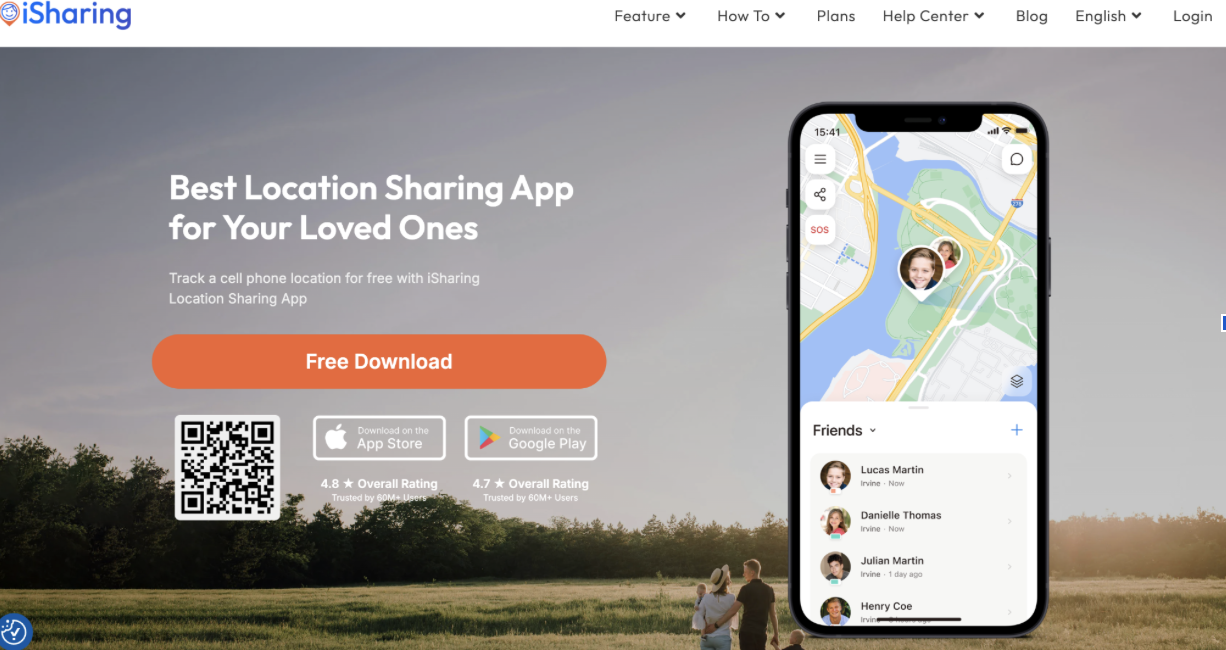
iSharing is a GPS-based family location sharing app that’s been running since 2010 and now serves over 66 million users globally. Families get real-time location updates, geofencing with place alerts, SOS buttons with audio recording, driving behavior reports, and tools built for elderly care monitoring. For parents who want something that just works without a steep setup curve, they offer an easy to use location tracking app for free that covers the main features without requiring a paid plan right away. The app runs across iOS, Android, iPad, and web, which matters when families use a mix of devices.
What’s the Case for iSharing on Family Location Tracking Apps?
The problem iSharing solves is real: most tracking apps either drain batteries fast or sacrifice accuracy to save power. iSharing’s architecture keeps location updates running at 5 to 15 seconds without the excessive battery hit that similar apps are known for. That combination of speed and performance is rare at this price point, and it’s what makes iSharing a practical daily driver rather than an emergency-only tool.
What People Actually Say:
The 4.8/5 rating on Google Play across over 224,000 reviews is built mostly on two things: the accuracy of real-time location updates and how reliably the place alerts fire. Users coming from Life360 tend to stick around because the battery performance is noticeably better. A few people want more features on the free tier, which is fair, but the overall sentiment is strongly positive.
-
HeyPolo – Best for Families Rejecting Surveillance
What does HeyPolo do?
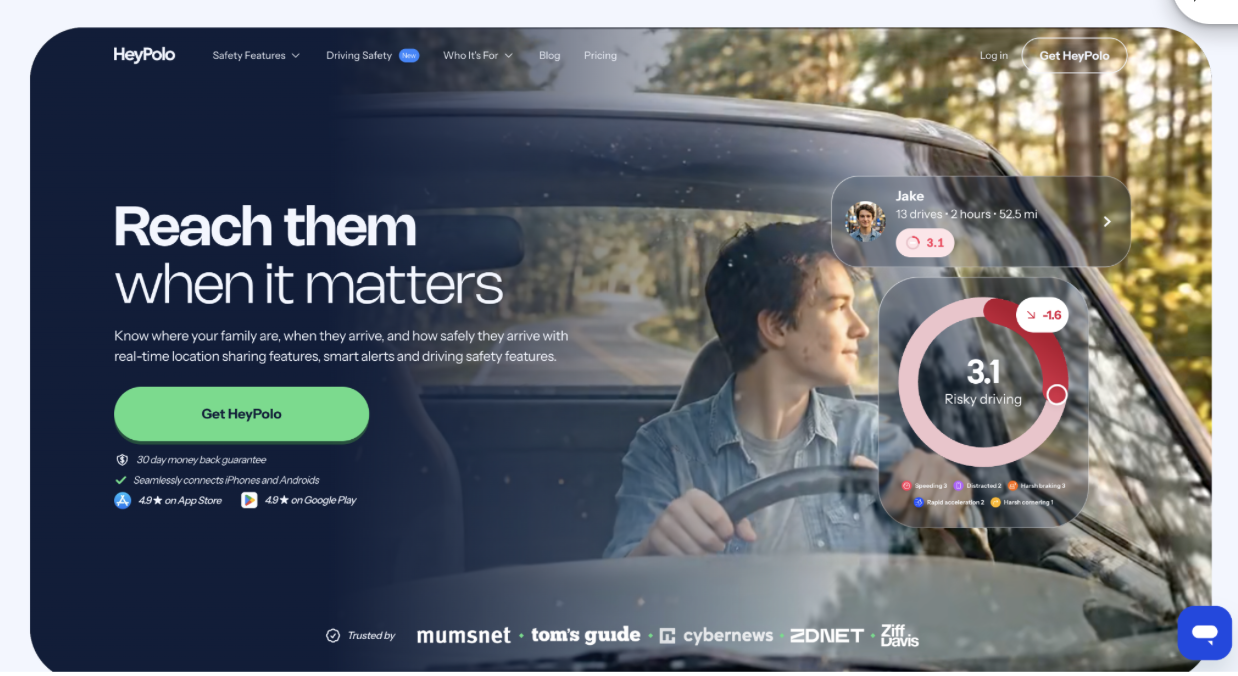
HeyPolo is a consent-first family location sharing app built by the team behind Surfshark, the VPN company, which immediately signals that privacy isn’t a marketing word here but a design principle. Families can share real-time locations with time-limited controls, set up geofencing alerts, and use an SOS button for emergencies, all with end-to-end encryption and a firm policy against selling location data. One subscription covers unlimited family members, which is genuinely useful for larger households. The app is available on both iOS and Android and is designed to be low-friction for non-technical users (which means grandparents can figure it out too).
What’s the Case for HeyPolo on Family Location Tracking Apps?
HeyPolo directly addresses the tension between keeping kids safe and respecting their growing need for autonomy, which is probably the hardest problem in this entire category. The time-limited sharing model means a teenager can share their location for a specific outing without that access becoming permanent, and that kind of nuance actually gets teens to leave the app installed.
What People Actually Say:
Users on the App Store consistently call out how clean and straightforward the setup is, and the 4.8/5 rating there reflects that. The Google Play score of 4.3/5 is strong too, with reviewers pointing to the unlimited alerts per person as a standout feature compared to apps that charge per location or per member. A small number of iOS users flag that the location indicator is always visible in the status bar, which some find annoying, but that’s more of a platform behavior than an app flaw.
Why These Picks Made the List
Sourcing and Structuring Raw Information Assets
The process started by pulling together a broad set of family safety apps from multiple sources, including app store listings, parenting forums, family tech review sites, and app directories. Each app was logged with its feature set, pricing structure, platform availability, and user sentiment data. That raw list was deliberately wide before any filtering began, because the goal was to avoid missing strong options just because they’re newer or less marketed than the big names.
Vetting Criteria and Baseline Requirements
Apps without verifiable review histories or with patterns of incentivized or suspicious ratings were removed early. The focus stayed on options with genuine reviews spread across multiple platforms, not just one app store. Review patterns were analyzed for consistency: apps that rated well across both iOS and Android with similar feedback themes carried more weight than those with wildly different scores depending on the platform.
Evidence-Based Validation Steps
Claims made on official product pages were cross-referenced against what actual users reported. If an app marketed itself as battery-friendly, the review threads were searched for battery drain complaints to see whether that claim held up in day-to-day use. This step caught several apps that made strong marketing claims which didn’t match the experience users described in reviews from the past 12 months.
Authority and Thought-Leadership
Apps built or backed by organizations with established credibility in adjacent fields, like privacy tech or consumer software, were given closer attention. HeyPolo’s connection to the Surfshark team is a clear signal that privacy architecture wasn’t bolted on after the fact. iSharing’s 15-year track record and user base of over 66 million accounts also served as authority markers that reflect sustained real-world trust rather than a one-time launch spike.
Family Location Tracking Apps Capability Verification
Each app’s dedicated feature pages were reviewed for specific family safety capabilities: real-time GPS update frequency, geofence customization options, SOS functionality, location history depth, and multi-member account support. Where feature claims existed, they were validated against user-reported experiences in reviews. Apps that offered well-documented family safety tools with verified positive feedback on those specific features were the ones that made the final list.
Selection Tips for Choosing Family Location Tracking Apps
Before committing to any app, it helps to be clear about what your family actually needs versus what sounds good in a feature list. Here are five areas to evaluate carefully.
- Industry/Domain Experience: Look for apps that were built for families, not general location tools that added a “family mode.” Dedicated family safety apps tend to handle edge cases like indoor GPS drift and low-signal environments better.
- Features and Service Options: SOS alerts, geofencing, driving reports, and location history depth vary widely. Decide which features are non-negotiable before comparing pricing, so you’re not paying for things you won’t use.
- Pricing Structure: Free tiers can be genuinely useful (iSharing’s is) or basically unusable. Check whether the free plan includes real-time tracking or limits updates to intervals that make the app impractical for daily use.
- Results Measurement: Geofence alert accuracy and location update speed are the two metrics that determine whether an app actually works. Prioritize apps with reviews that confirm these work reliably.
- Industry Knowledge and Compliance: Particularly for apps used to track minors, check how the app handles COPPA, GDPR, and children’s data protection laws. End-to-end encryption and a clear no-data-selling policy are minimum expectations, not bonus features.
Bottom Line
Choosing between iSharing and HeyPolo mostly comes down to what your family values more: proven scale and battery-efficient real-time tracking, or a privacy-first design with time-limited sharing controls. iSharing’s 15-year track record and large user base make it a low-risk starting point. HeyPolo’s Surfshark DNA makes it the stronger pick for families where teen autonomy and data privacy carry equal weight to safety. Both apps reflect where family location tracking is heading in 2026.
Disclosure – this is a collaborative post.

