Disclosure – this is a collaborative post.
A machine that sews tidy cotton patchwork and a machine that copes with stretchy clothing, neat edge finishing and buttonholes are not always the same machine. That is why there is no single best sewing machine for quilting beginners; the answer depends on what you actually plan to make and mend. This guide covers the features that genuinely help a first-timer, how to test a machine sensibly in a shop, and how to decide between a straight-stitch quilting machine and a more versatile all-rounder. You can make a quilt on almost any machine, but some will make learning far smoother than others.
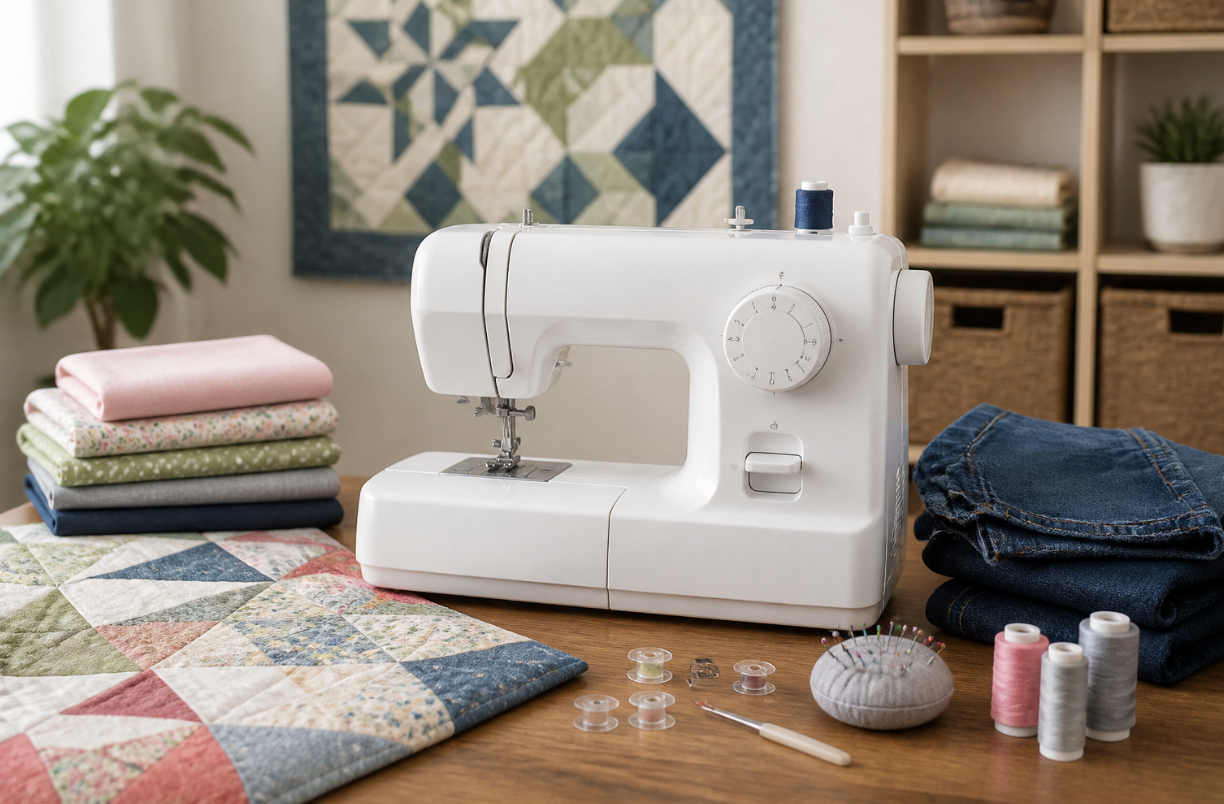
Sewing Machine Basics for Beginners: How to Choose Your First Machine for Quilting and Everyday Repairs
Choosing the best sewing machine for quilting beginners starts with your projects
Start by listing your first five projects. Cotton patchwork, cushion covers and repairs to seams or hems in suitable woven fabrics mostly need good straight stitching, but stretchy clothing is different because its seams must stretch with the fabric. Zigzag edge finishing and machine-made buttonholes also need extra capabilities that a plain straight-stitch machine does not offer.
That list drives the decision. If your projects are quilting-led, a straight-stitch machine can be a sensible, focused choice, whereas if varied clothing repairs matter just as much, an all-rounder with zigzag, suitable stretch stitches and a buttonhole function is usually more practical. When comparing industrial sewing machines with domestic models, consider your intended projects and the features you actually need. A huge decorative stitch count is no substitute for the few functions you will really use.
For the straight-stitch route, Juki offers the TL sewing machines designed for quilting, which are worth a look for quilting-focused sewing and suitable woven-fabric home projects. Be realistic about the trade-off, though: they do not offer zigzag, stretch stitches or automatic buttonholes, so they will not cover every household repair. Features and included accessories also vary by model, so check the specific UK model you are considering rather than assuming every machine in the range comes equipped the same way.
Prioritise easy control, accurate seams and room for quilt layers
Begin with consistent straight stitches. Even stitch formation and a reliable seam allowance help patchwork pieces meet accurately, and they make everyday repairs look neater too.
Next, a needle threader makes set-up less fiddly, though it will not necessarily thread the whole machine, so ask for a demonstration and then try it yourself. Look for controllable slow sewing as well. Test the pedal response and any speed limiter, since confidence at low speed matters far more than an impressive maximum speed. Reliable feeding means the machine moves fabric evenly over seam joins and through your intended layers without you having to pull it, and headline motor speed tells you nothing about feeding strength or stitch quality.
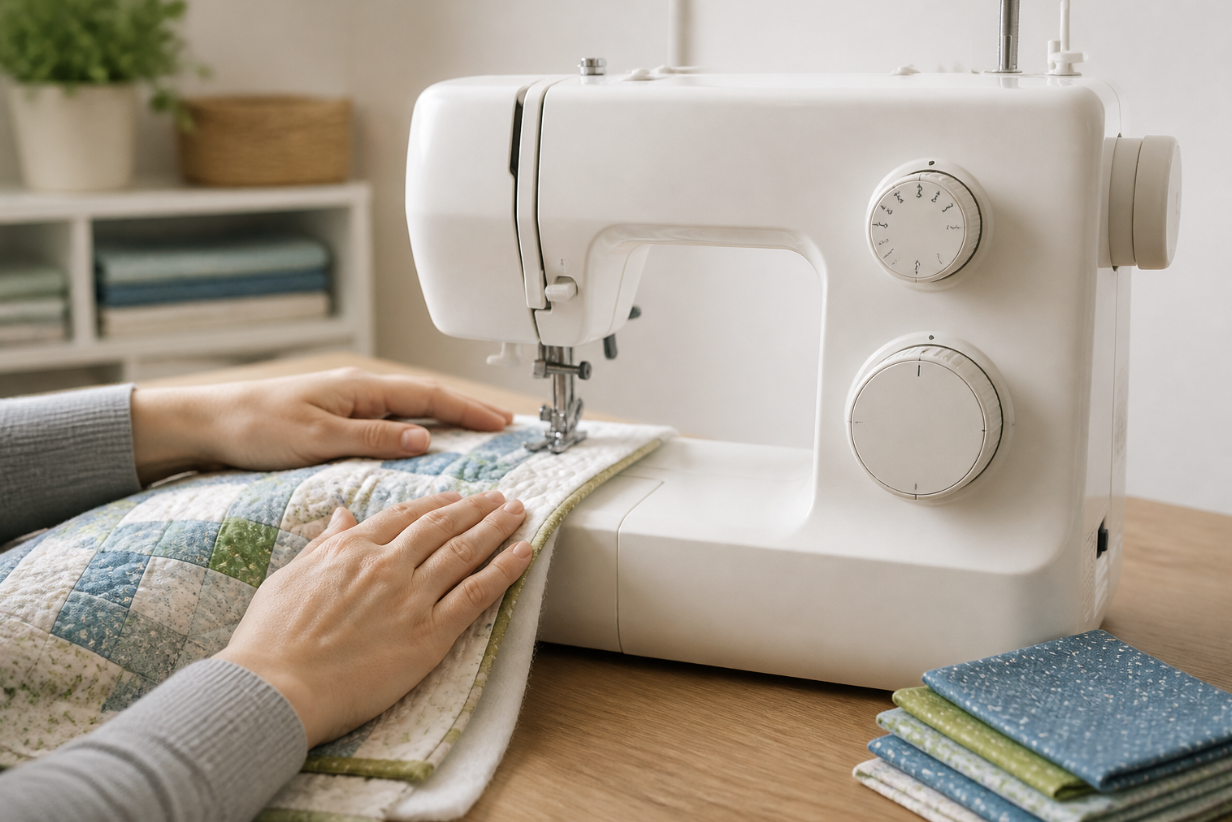
Then separate two jobs. Piecing joins patchwork into a top, while quilting stitches through the top, wadding and backing. For quilting, check the space to the right of the needle against your intended quilt size, and make sure a table or extension surface supports the weight rather than letting it drag.
Finally, look for a quarter-inch seam guide or a compatible patchwork foot. For straight-line quilting, check that a walking foot fits, and for free-motion work, check for the right foot and how the maker lowers or covers the feed dogs. Confirm what is included and what costs extra.
Prioritise easy control, accurate seams and room for quilt layers
Take a project-based checklist to your machine demonstration
Set a total budget that covers the machine, suitable needles, thread, bobbins and any essential feet or support table not included, and leave optional extras until your projects justify them. Check the weight, how comfortably you can lift it, its storage dimensions and your sewing space, especially if the dining table must be cleared after each session. Ask what introductory instruction is available, who handles servicing and repairs, and what ongoing support costs.
Then bring scraps resembling your plans: patchwork cotton, a woven repair with a folded seam, and a small quilt sandwich if you intend to quilt through layers. Test slow starts, consistent quarter-inch seams and feeding over joins, and if stretch stitches or buttonholes are buying requirements, try those too.
The decision rule is simple. Shortlist only machines that handle your intended project mix comfortably, then choose the one whose controls, total cost and practical footprint suit you best.
Disclosure – this is a collaborative post.

